
From “Hema, Rekha, Jaya, Sushma” to Shared Roles: How Advertising Rewrote the Story of Women
“Hema, Rekha, Jaya aur Sushma… sabki pasand Nirma.”
For generations of Indians, the line still rings instantly familiar. It was catchy, memorable, and unmistakably part of popular culture. But look closely, and the line also revealed something deeper about the time it belonged to. The detergent was everyone’s favourite, yet the decision-makers being shown were women. The unspoken assumption was clear: the laundry was hers.
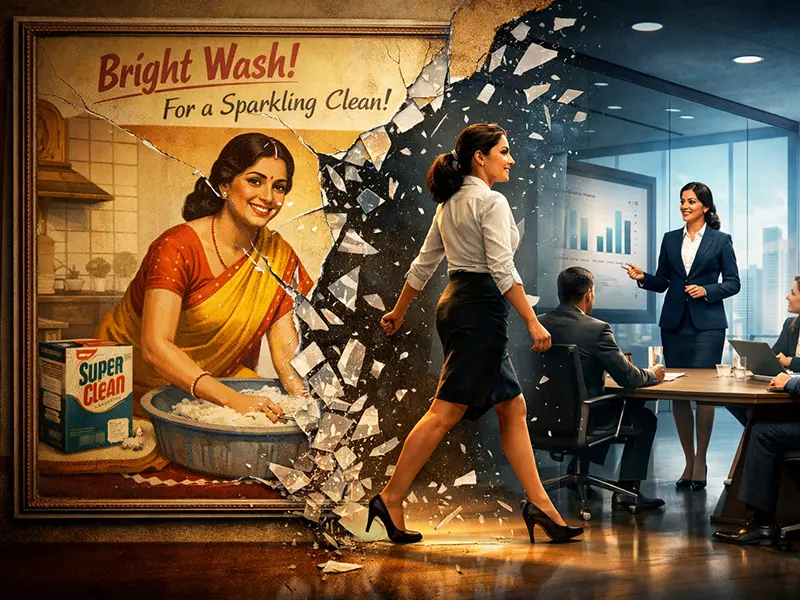
Advertising has always been a mirror of society. It captures what people believe, how families function, and what roles are silently assigned within homes. In the early decades of Indian advertising, the woman in ads was almost always the homemaker, efficient, responsible, and quietly central to the family’s daily life. She chose the detergent, the cooking oil, the soap. She was the guardian of the household’s well-being.
Lines like “Daag achhe hain” later added a playful twist to motherhood, celebrating the mess children make while growing up, but the responsibility of dealing with those stains still belonged to her.
None of this was accidental. Advertising speaks the language of familiarity. It reflects what audiences recognise as truth. And for a long time, the Indian household itself was structured around these roles.
But culture never stands still. And neither does advertising.
Slowly, the stories began to change. Women in advertisements started appearing not only in kitchens and laundry rooms, but also in offices, classrooms, stadiums, and boardrooms. They were no longer just caretakers; they were achievers, decision-makers, dreamers.
More importantly, the context around everyday chores began to shift.
Campaigns began asking uncomfortable but necessary questions. Why should household responsibilities belong to only one person? Why should equality stop at the workplace door?
One of the most powerful lines in recent advertising captured this shift beautifully:
“Share the Load.”
Suddenly, the detergent conversation was no longer just about how clean clothes could get. It became about fairness at home. About fathers teaching sons that laundry is not a gendered task. About husbands stepping into kitchens and washing dishes without it being portrayed as an act of heroism.
And this shift hasn’t remained limited to one category. From fashion brands to FMCG giants, advertising today is increasingly reflecting a more balanced reality. Women are being portrayed with agency, ambition, and individuality. Men, in turn, are being shown as equal participants in the rhythms of everyday life. The narrative is no longer about roles assigned by tradition, but about partnerships shaped by respect.
This is the quiet power of advertising. A 30-second story can start a cultural conversation.
Around International Women’s Day, this conversation often becomes louder. Brands celebrate women’s achievements, share inspiring stories, and champion equality. But the most meaningful advertising does not treat these ideas as a once-a-year theme. Real progress lies in consistency, in ensuring that the respect shown in a Women’s Day campaign is reflected in communication throughout the year. Encouragingly, many brands today are beginning to embrace this responsibility, weaving messages of equality and empowerment into their everyday storytelling.
The woman in Indian advertising today is no longer defined by a single role. She may be a mother, a professional, an athlete, an entrepreneur, sometimes all of them at once. And increasingly, the men around her are shown not as passive observers, but as partners sharing responsibilities.
The screen, in many ways, has caught up with the real world.
At Water Communications, we see advertising as a powerful cultural voice. Over the years, we have closely followed this evolution and aspire to craft communication that inspires connection and thoughtful change. Because when stories reflect the aspirations of women, not just their responsibilities, advertising begins to do something far more meaningful than selling products.
It helps shape a more equal tomorrow.
- The Taaza Playbook: Winning India’s Most Divided Category
- From “Hema, Rekha, Jaya, Sushma” to Shared Roles: How Advertising Rewrote the Story of Women
- When Naming Becomes Strategy: The Sony Story
- The Cool Big Idea: How Symphony Reimagined Design and Desire
- From Pepsin to Pop Culture: The Evolution of Pepsi
- Spirituality as a Formula: The Curious Case of Godrej Ganga Soap
- The 50cc Revolution: How Bajaj Sunny Created a Category
- Humko Binnie’s Mangta: When Bambaiya Hindi Became Brand Language
- Not Drama, Just Truth: The Campaign That Redefined Detergent Advertising in India
- Everybody’s Cup of Tea!
- The Stencil for Success... And Failure!
- It’s a Sony
- The Cool Big Idea
- God is in the Detail
- 50 Cc of Marketing Dynamite
- Everything Official About Pepsi
- Humko Big Idea Mangta
- Coming Clean on Saas-bahu Non-reality
- Ahead of Its Time
- Small G: the Big B of Film Magazines
- Truly Mass Media
- 7-eleven is 24x7
- A Case of Risk and Reward
- A Whale of an Idea
- Wide Open
- How Citibank Unfixed Its Problem
- Fired Up for Success
- Red Alert!
- The Power of a Big Idea
- Hamara Big Idea
- Puf: the Tale of a Cool Superhero
- Wd-40’s Secret
- A Victorious Brand Story
- The Idea About Ikea